Solutions
Not every workload belongs in the same place.
Automations, knowledge assistants, agents, and private deployments — built, documented, and kept running. Browse by what you want to change, by the industry you are in, or by the capability you need.
By outcome
Start from what you want to change.
Each card below starts from something people say about their own work. Find the one that sounds like your week, and it points at the piece of work that should come first.
Automation Sprint
My team repeats the same manual work every week.
We map the workflow as it actually runs, including the parts nobody documented, then automate the highest-volume stretch of it. Error handling and human checkpoints go in wherever a mistake would cost something. You get a running system in weeks, documented well enough that your own team can change it.
See how a sprint runs →Knowledge Assistant (RAG)
The answers are in our own documents, and nobody can find them.
We put retrieval over your contracts, tickets, research, or archive, so a question returns an answer with the source attached. Where the documents are sensitive, the assistant answers from a model on infrastructure you control. Where they are not, it answers from a frontier model and costs less to run.
Read how we built ours →Private AI Deployment
This data cannot leave our building.
Regulated, privileged, or contractually fenced data can be worked on by a model you host yourself. We size the hardware, deploy the model, put access control and logging around it, and measure its answers against your real documents before anything depends on it.
See the deployment path →AI System Build
We need an AI feature, and I cannot pull engineers off the roadmap.
We build the feature alongside your team rather than instead of it: the model work, the evaluation harness, the guardrails, and the integration into your product. Your engineers review the code and own it at handover. Providers stay abstracted, so changing model later is a configuration change.
See how we build →Managed Automations
We already have automations, and keeping them alive is the problem.
Automation decays: APIs change, models are deprecated, and the person who built it leaves. On a monthly retainer we monitor what is running, fix what breaks, and keep improving it — whether we built it or you did. You get one number to call and a monthly report of what changed.
See the retainer tiers →Opportunity Audit
$3,500
I want to know where AI actually pays off here.
The audit is the way in. In one to two weeks we map your processes, quantify where time and money leak, check your data-privacy posture, and hand back a ranked plan with each workload placed on the public, hybrid, or private path. The fee credits toward a build booked within 30 days.
Book the audit →By industry
Start from the work your industry already does.
Each playbook is pre-scoped for a category we have worked in, so the first conversation begins from your bottlenecks instead of a blank page. The offers underneath are the same ones; the starting assumptions are not.
Pre-scoped playbook
CPG & DTC
Retail portals, marketplace operations, and a constant stream of customer reviews, automated and turned into decisions someone can act on. Sales and supplier data can stay private while content and research run on frontier models.
Explore CPG & DTC →Pre-scoped playbook
Agencies
Cut the reporting and production grind inside the shop first: client reporting, briefs and drafts, proposal generation, and inbound qualification. Then white-label private AI as a line your clients pay for, under your brand.
Explore agencies →Pre-scoped playbook
Media & Publishing
Repurpose what you publish into clips, threads, and newsletters in your own voice, and make the back-catalog searchable instead of merely stored. The archive is proprietary, so the assistant reading it can run privately.
Explore media & publishing →Pre-scoped playbook
Professional Services
Legal, accounting, and finance run on documents that are privileged or regulated. We put question-answering, intake triage, and drafting assistance on top of them, with the model running on infrastructure you control.
Explore professional services →Pre-scoped playbook
$6,500
Startups & YC
Ship the AI feature or the automation in weeks without moving anyone off the product roadmap. The YC Automation Kickstart is a flat two-week engagement at $6,500: we audit the bottleneck, build one automation, and hand it over.
Explore startups & YC →Everywhere else
Your industry is not on this list.
The playbook pattern travels. If your category has a bottleneck that repeats from company to company, we can scope one for it.
Ask about your industry →By capability
Start from the capability you need.
Seven capabilities, and what each one looks like when it is actually running. The screenshots are of systems on our own infrastructure rather than mockups.
Build
Workflow automation
n8n workflows that connect the tools you already run — CRM, email, documents, finance, support — with error handling, logging, and human checkpoints where they matter. We run our own firm this way, so the failure modes we design around are ones we have had ourselves.
Read how we automated ourselves →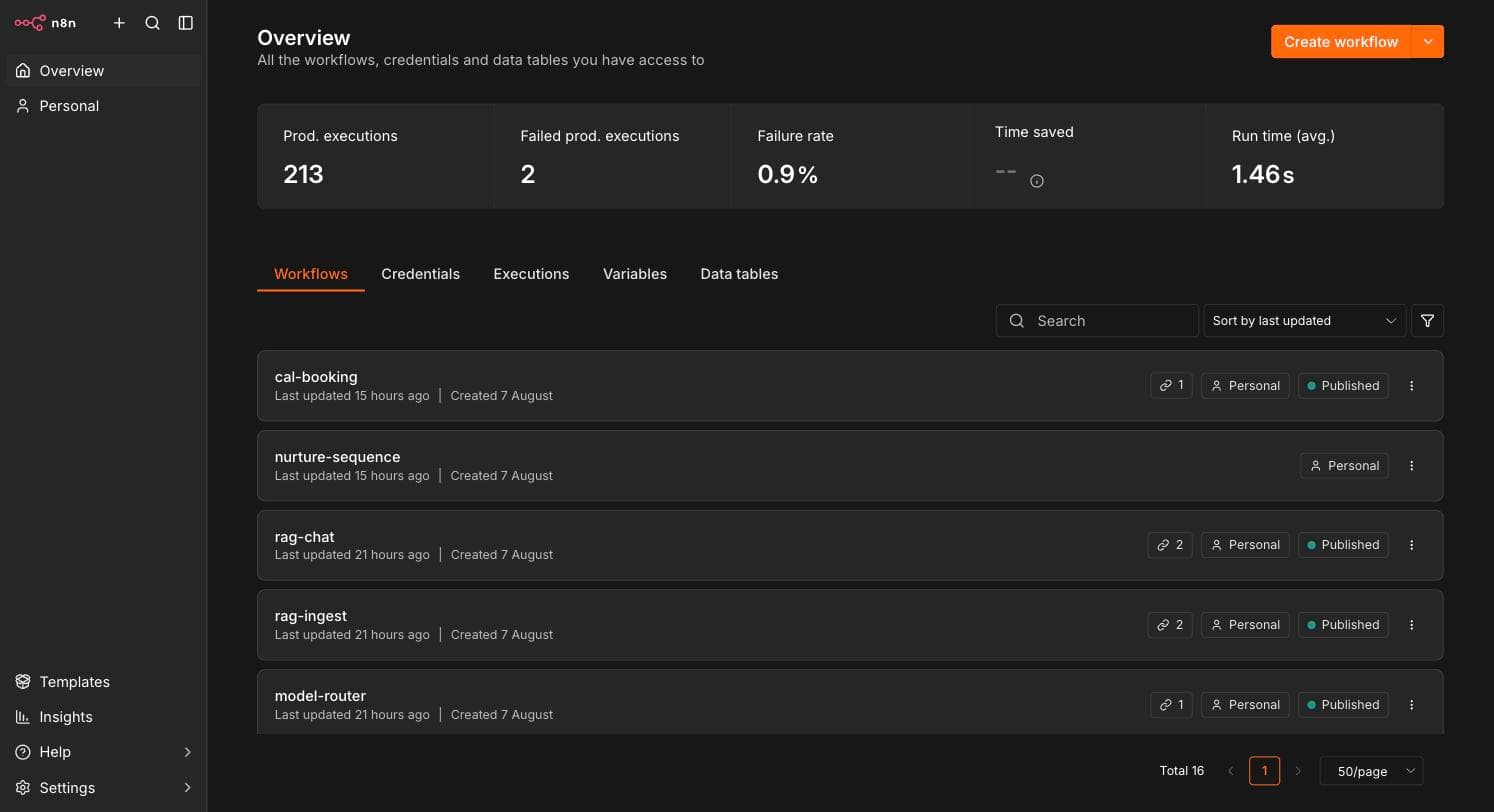
Build
Knowledge & retrieval (RAG)
Question-answering over your own documents, where every answer carries the source it came from and there is an explicit refusal path when the documents do not contain one. The same assistant can answer from a frontier model or from a model on your own hardware, depending on what the document is.
Read how it was built →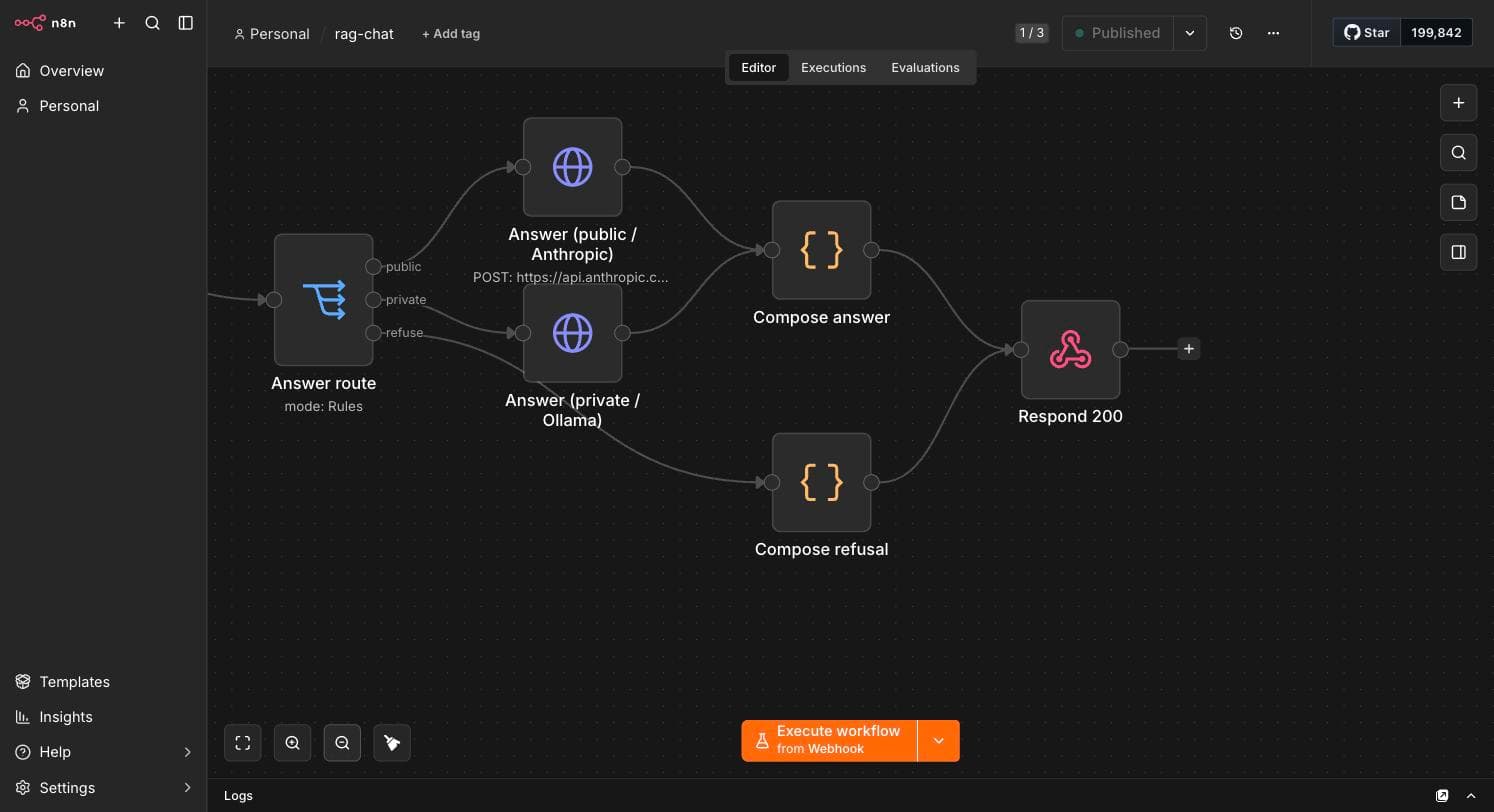
Build
Agents with human oversight
An agent earns its place where a decision repeats and a person cannot look at every instance. We put a classifier in front of the action, a budget on what may happen unattended, and an escalation path for everything else. Our own error handler works exactly this way: a local model triages each failure, retries only what is safe to retry, and pages a person for the rest.
Read the error-handler build →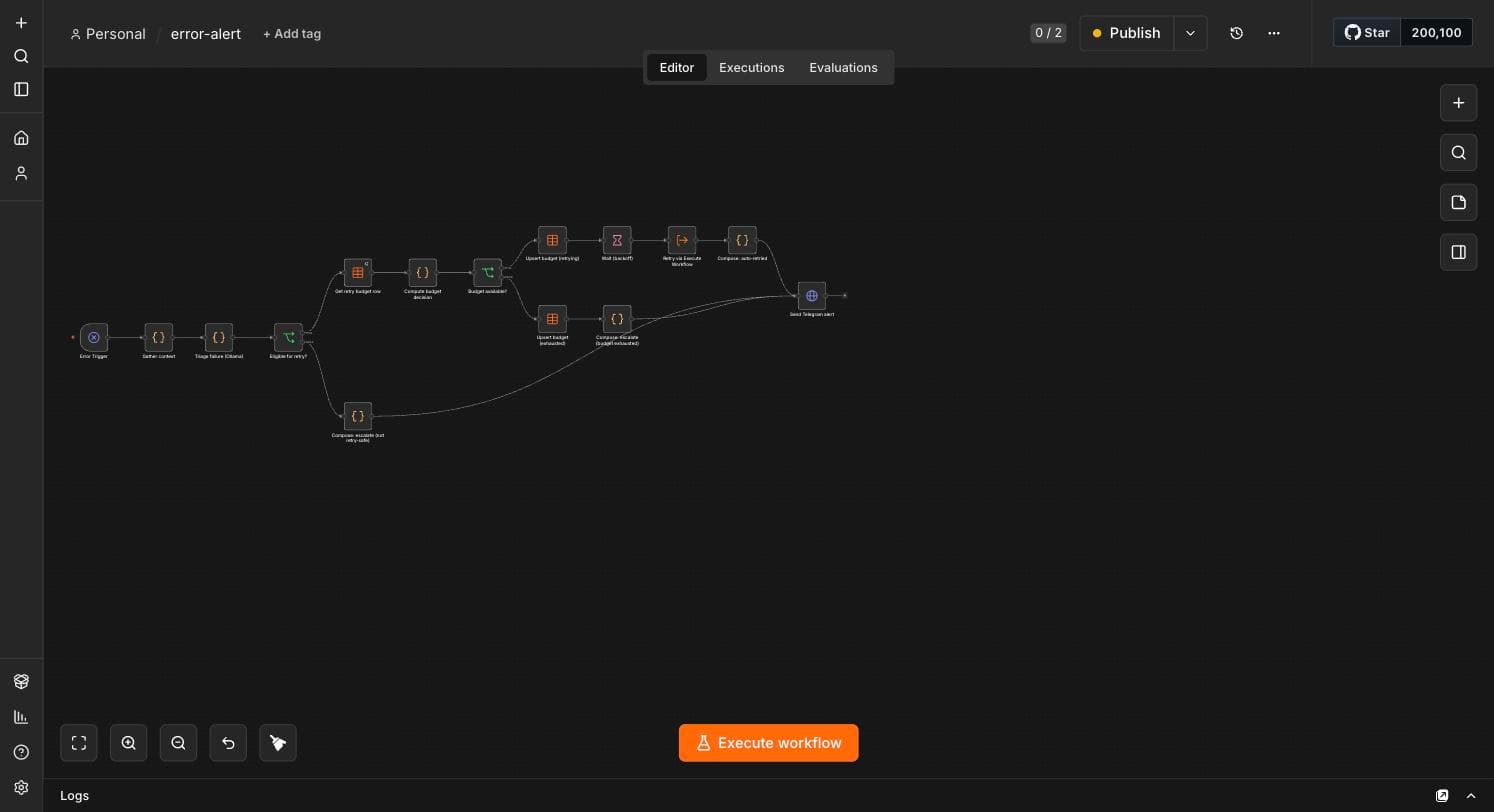
Architect + Build
Private deployment
Open models on hardware you control, behind your own access controls and logs, for the workloads that cannot use a hosted API. We size it, deploy it, and measure it against the frontier before you rely on it. Our own data-subject-access pipeline runs this way, because a DSAR is precisely the data you should not be copying to a third party.
Read the DSAR pipeline build →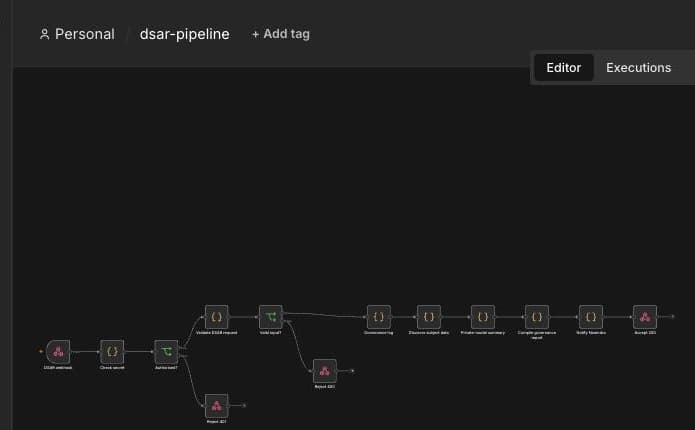
Architect
Hybrid routing & data boundaries
One boundary that classifies each request, redacts what should not travel, and routes it to a public or a private model accordingly. Every call is logged and providers are abstracted, so a model swap is a configuration change rather than a rebuild. We build AI systems that run public where it makes sense and private where it matters, and this is the piece that enforces the difference.
Read how the router works →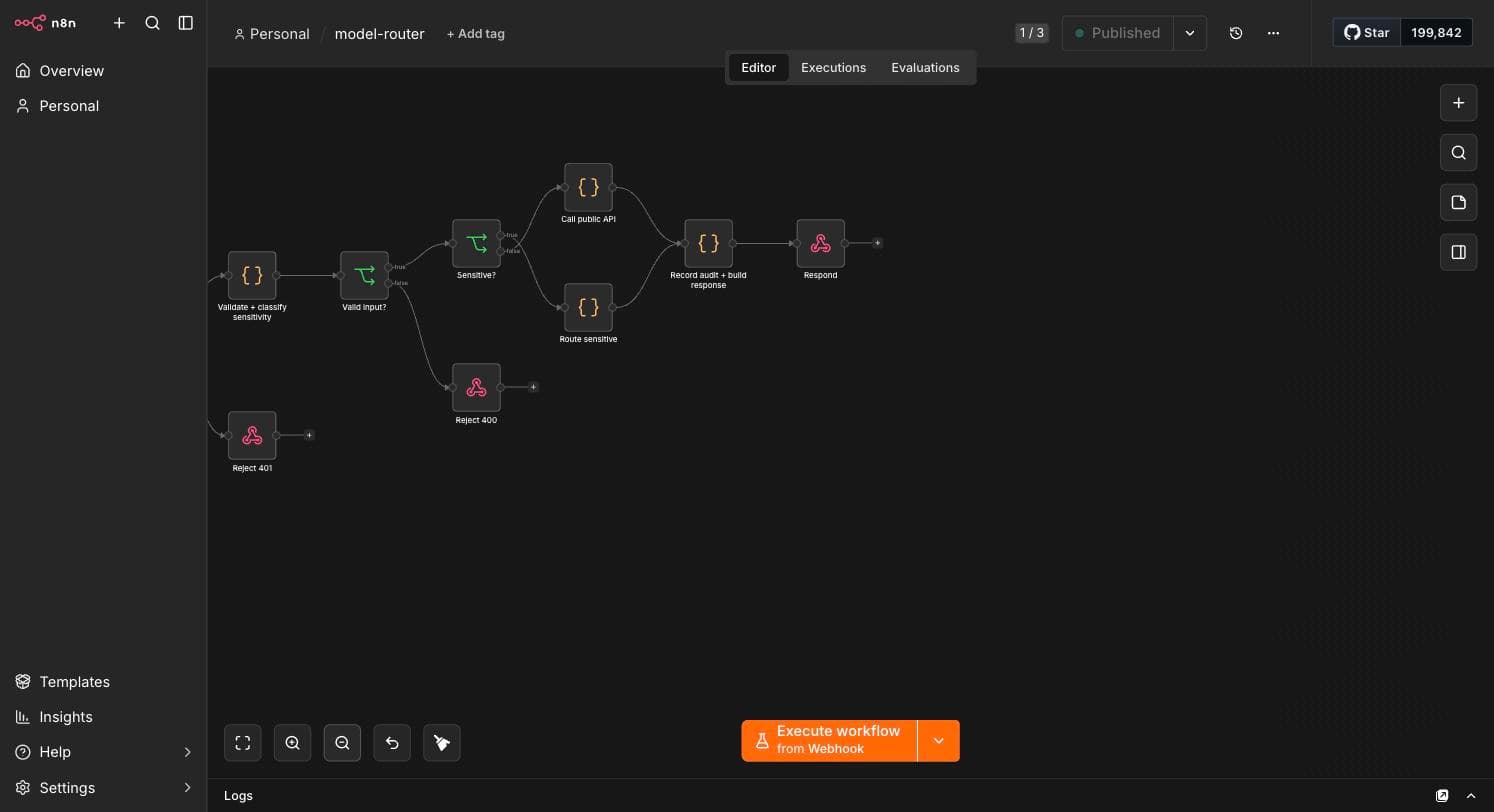
Operate
Evals, guardrails & observability
Before a system is trusted it gets a test set drawn from your real tasks and a score for accuracy, latency, and cost. After it ships, the same harness runs against new models, so you can see what a change would do before you make it.
Read how we measure placement →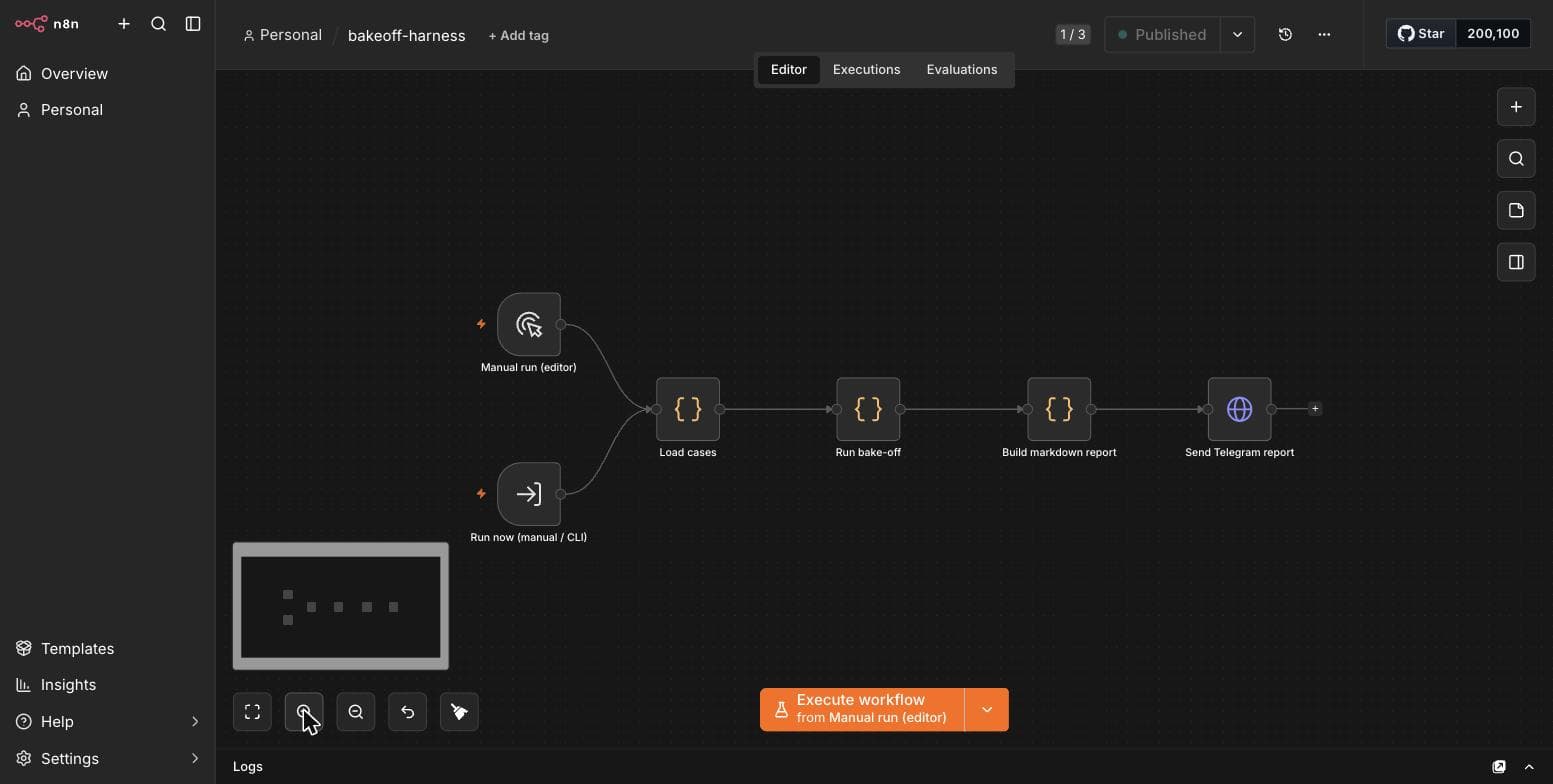
Enable
Adoption & enablement
The common failure of automation is not technical: the system works and nobody uses it. We map who has to adopt the change before we design it, then hand over runbooks, training, and a team that can extend what we built without us.
Read why automations fail →Start with the audit, and find out what belongs where.
The Opportunity Audit takes one to two weeks, costs $3,500, and returns a ranked plan with each workload placed on the public, hybrid, or private path. The fee credits toward a build booked within 30 days.